
Google launches Gemini 4 Argon: What the new AI model can do
Gemini 4 Argon is available to developers and subscribers. We examine its context window, model card, benchmark limits and agent workflows.
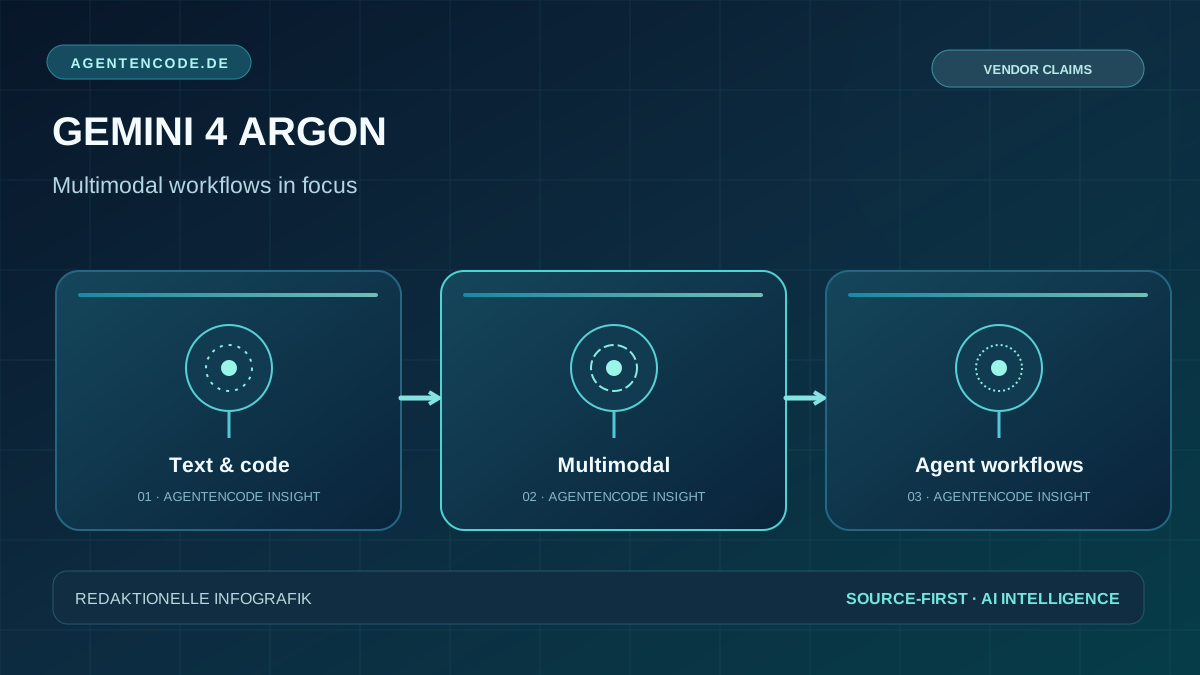
Google expanded access to Gemini 4 Argon on October 13, 2026. It targets complex multi-step tasks and supports a combined input-output context of up to one million tokens according to Google. Benchmark scores do not guarantee real-world project quality.
Access to Gemini 4 Argon initially expanded in stages, including selected cyberdefence partners.
On October 13 Google announced wider access for developers and paid subscribers, with availability depending on the product and plan.
Availability
Google lists Argon for the paid Gemini API and selected Google AI subscriptions. Access and features depend on the product and plan.
Technical distinction
The model card describes multimodal inputs and a combined context of up to one million tokens. Capacity alone does not establish quality.
How to read benchmarks
Google reports comparisons for coding, knowledge work and computer use. Results depend on tasks and evaluation methods and require independent replication.
What broader access changes for builders
The significant change is not a single benchmark score but access to a model that Google explicitly positions for complex, long-running work. Developers can use Argon through the paid Gemini API tier; Google also highlights AI Studio, Antigravity and selected consumer subscriptions. These channels are not interchangeable. Using a chat application, integrating an API and running an agent-first development workflow have different cost, access and operational implications.
A large context-window specification is not proof that an assistant will consistently remember every relevant detail, call tools correctly or recover from multi-step failures. Teams should evaluate performance using their own documents, codebases and representative tasks. Capture failure rates, latency, human intervention and total cost instead of assuming that public rankings reflect a production workload.
Google points to software engineering, enterprise knowledge work and cybersecurity defence as areas of interest. For adoption decisions, independent replication and governance requirements matter alongside provider benchmarks. In particular, sensitive workflows need clear permission boundaries, audit trails and human approval before consequential actions. The announcement is a reason to test, not evidence that a deployment is already safe or cost-effective.
AgentenCode analysis
Our analysis: Teams handling long documents and multi-step workflows should pilot Argon on their own tasks. Test costs, failure rates, privacy and human approval before production use.
Sources and verification
We reviewed the linked original announcements and independent reporting. Claims are attributed; this article does not report independent product testing. The event date may precede today's publication date.