Editorial dates per profile · HTTP source monitoring separate166 active agents & platforms · No paid rankings

AGENTENCODE · INDEPENDENT INTELLIGENCE

Understand AI agents. Make better decisions.

Find the right AI agents. Verify what they can actually do. Explore independent analysis and clear answers grounded in verifiable sources.

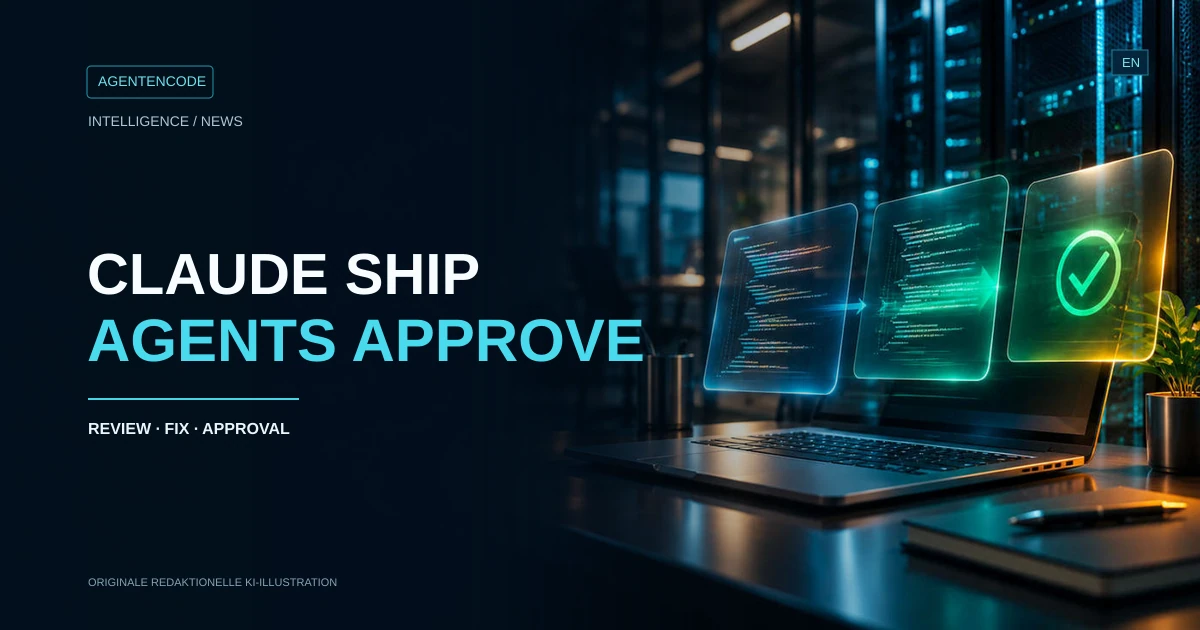
LATEST INSIGHT · 24 November 2026Claude Ship: AI agents review, fix and approve code — who controls the merge?Read the analysis ↗

AI NEWS

Latest AI news

Important AI developments, independently assessed and backed by original sources.

Nous Research – Hermes Agent v0.23.4Hermes Agent 0.23.4 adds Gemini models and security approvalsThe stable Hermes update consolidates 229 merged pull requests. Release notes mention new Gemini 4 models and approval cards for folder and website access.Developer toolsGenerally availableFor: Developer teamsNext step: Check distribution-specific features and sandbox approvals before updatingRead assessmentClose assessment

The AgentenCode assessment

Our perspective

Nous Research has released Hermes Agent 0.23.4 as a stable patch. The published overview records 229 merged pull requests since version 0.23.3. These include support for Gemini 4 Hydrogen, Neon and Carbon through several model providers, alongside additional plugin configuration options.

Of particular interest to agent users are the reported approval cards for sandbox folder and website requests. These may help make access decisions visible. The release notes clarify, however, that the standalone desktop installer will receive an update in a subsequent bundled release. Full curated release notes are planned for version 0.24.0.

Teams should therefore establish which features their particular distribution actually includes before updating. Model selection, plugin permissions and sandbox approvals warrant targeted testing. The number of changes alone does not demonstrate greater reliability or security in a production environment.

Original source: Nous Research – Hermes Agent v0.23.4 · Source dated 23 Nov 2026

AWS – Automated AI endpoint discovery and protectionAWS adds automated discovery and protection for MCP and A2A endpointsAWS API Portal identifies AI endpoints at supported AWS entry points. A new WAF rule group checks agent protocols and can inspect content through Bedrock Guardrails.SecurityGenerally availableFor: Security teamsNext step: Verify protocol coverage, protection rules and fees before activationRead assessmentClose assessment

The AgentenCode assessment

Our perspective

AWS announced general availability of new AI endpoint discovery and protection capabilities. API Portal identifies LLM, MCP and A2A interfaces behind supported AWS services using configuration and traffic data. The new AWS WAF AI Security rule group can check recognized MCP and A2A messages for protocol compliance.

When content inspection is enabled, Amazon Bedrock Guardrails can detect threats including prompt injection and sensitive information. This addresses risks at the communication layer between agents and their tools. Discovery of an endpoint does not, however, mean that a protective rule has automatically been enabled.

Organizations should review supported protocol versions, regions, operations actually assessed and additional charges. A pilot should account for unrecognized messages and failed content inspections. The new infrastructure complements application-specific access controls and approval mechanisms rather than replacing them.

Original source: AWS – Automated AI endpoint discovery and protection · Source dated 23 Nov 2026

Kaviru Hapuarachchi – Exercised, Rarely Recovered (arXiv preprint)Study: AI agents rarely recover fully after failuresA preprint examines 50 agent runtimes and harnesses and 128 publicly documented recovery reports. Only 19 describe full recovery.Research & modelsResearch / testFor: Researchers & evaluatorsNext step: Test checkpoints, rollback and external side effects explicitlyRead assessmentClose assessment

The AgentenCode assessment

Our perspective

A preprint by Kaviru Hapuarachchi posted on November 20 examines eight recovery mechanisms across 50 agent runtimes and harnesses. Among 128 publicly documented reports, 19 describe complete recovery, 54 partial recovery and 45 failed recovery. The remaining ten reports are not classified further in this summary.

The findings highlight a central question for agent systems: how reliably can an interrupted or erroneous workflow resume? The author records only one complete recovery among 27 checkpoint and resume reports, and one among 15 rollback reports. These cases are not representative failure rates across all agent executions.

Organizations should consider targeted recovery testing involving controlled interruptions, erroneous tool responses and verifiable intermediate states. External side effects need separate consideration from internal agent state. The preprint motivates such tests but does not establish a universal ranking or independent certification of the products examined.

Original source: Kaviru Hapuarachchi – Exercised, Rarely Recovered (arXiv preprint) · Source dated 20 Nov 2026

Anthropic – Claude Code changelog 2.1.331Claude Code brings Code Mode to four cloud platformsClaude Code 2.1.331 adds Code Mode support in terminal sessions on Amazon Bedrock, Google Cloud's Agent Platform, Microsoft Foundry and Claude Platform on AWS.Developer toolsGenerally availableFor: Developer teamsNext step: Test Code Mode and approvals separately in each cloud environmentRead assessmentClose assessment

The AgentenCode assessment

Our perspective

Anthropic extends the scope of Code Mode in Claude Code 2.1.331. The changelog lists support for terminal sessions on Amazon Bedrock, Google's Agent Platform, Microsoft Foundry and Claude Platform on AWS. The change concerns specific developer environments across several cloud platforms.

For organizations already running Claude Code through a cloud provider, this creates additional options for programmatic tool orchestration. More complex tasks may require fewer separate model interactions. The announcement does not, however, supply an independent comparison of cost, latency or success rates across these environments.

Before production adoption, teams should review available tools, identities and approval rules separately for each cloud environment. Useful pilot tests cover read and write actions, malformed tool responses and the traceability of executed steps. Code Mode support does not automatically establish equivalent security controls across all four platforms.

Original source: Anthropic – Claude Code changelog 2.1.331 · Source dated 23 Nov 2026

OpenAI – openai-node v7.63.0 release notesOpenAI adds spending limits for agent sessionsThe openai-node JavaScript SDK 7.63.0 adds support for spending limits on agent sessions.Developer toolsGenerally availableFor: Developer teamsNext step: Verify covered charges and behavior at spending limitsRead assessmentClose assessment

The AgentenCode assessment

Our perspective

OpenAI's JavaScript SDK 7.63.0 release notes list an API addition for agent session spending limits. This gives developers another configuration option for defining the financial scope of a session. The exact behavior needs to be assessed against the API version used.

Cost control matters especially for agents that perform many consecutive model and tool calls. A session-specific budget can help separate the financial scope of one task from other workflows. It does not replace project-wide or organization-wide spending monitoring.

Before production use, developers should verify which charges count toward the limit and what happens when the limit is reached. Any external tool charges also need separate accounting. The SDK change alone establishes neither a guaranteed hard ceiling on every category of spending nor a measured reduction in costs.

Original source: OpenAI – openai-node v7.63.0 release notes · Source dated 23 Nov 2026

NEW · PILLAR GUIDE

Build your own AI agent — from the first step

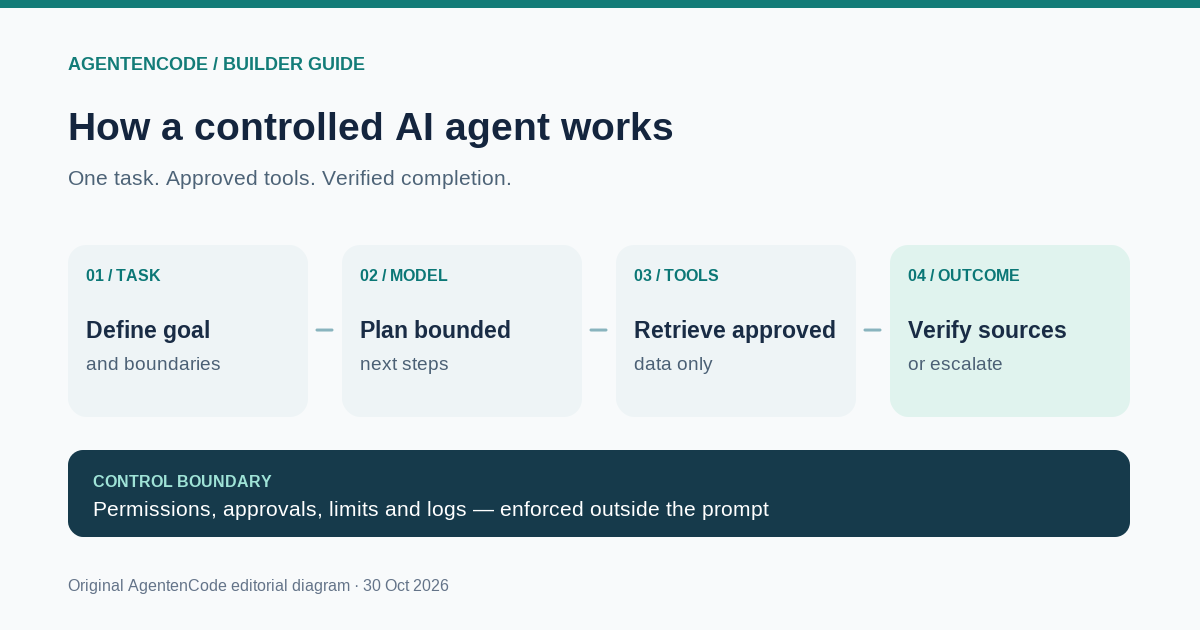
Start without coding, connect approved tools or build a Python agent. Practical examples, original diagrams, twelve test cases and safeguards for business use.

Read the complete guide

No-code · Python · Security · Costs

Original visual: task, agent, tools, approved result
AGENT CHECK · YOUR DECISION TOOL

Can this AI agent actually meet your requirements?

Check privacy, security controls and governance against documented primary-source evidence. See supported requirements and open questions—without rankings or blanket scores.

36 trust controlsEvidence & scopeUnknown ≠ No
Start a free Agent Check No signup required · Evidence-based pre-assessment, not a certification
Agent Check01 / 03 · Requirements

Which requirements matter for your use case?

✓ Data residency✓ Human approval✓ Audit logs
SUPPORTEDDocumented source
OPENFurther review needed

Illustrative interface · not a claim about any particular product

HOW AGENTENCODE WORKS

Evidence first. Agent claims in context.

AgentenCode is an independent reference for AI agents, not an official certification or blanket vendor ranking. Here is how we make our assessments traceable.

Original sources

Profiles and reporting link to documents or announcements wherever available. Vendor claims are labelled as such.

Evidence has limits

Unverified capabilities remain open questions. A listed tool is not proof it works in every setting.

Traceable change

Research methods and change history help distinguish current documentation from past versions.