
Meta unveils Muse Wonder: AI with memory and sustained focus
Meta introduces Muse Wonder and Muse Wonder Full with Active Memory and Active Focus. What is confirmed, who has access and what risks remain.
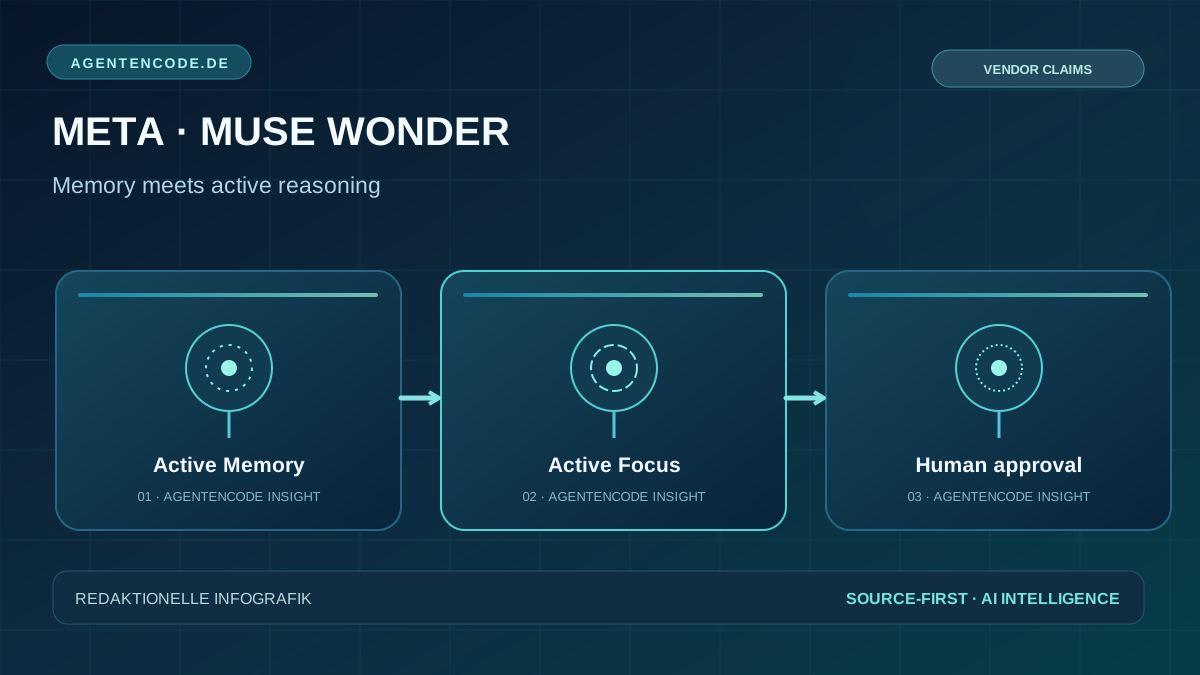
Meta announced Muse Wonder and Muse Wonder Full on October 12, 2026. Active Memory is designed to retain relevant context across conversations, while Active Focus supports longer tasks. These are vendor claims, not independent proof of reliable autonomy.
Muse Spark formed part of Meta's previous model foundation, while persistent multi-step personal workflows remained an important challenge.
Meta now presents Muse Wonder and Muse Wonder Full with Active Memory and Active Focus for longer tasks.
Two models
Meta says Muse Wonder is available via Meta Model API and Muse Code; Muse Wonder Full is available to Muse Code subscribers.
Active Memory
Meta describes carrying relevant details from previous conversations into future tasks. That raises questions about data control and deletion.
Active Focus
The model is designed to retry difficult tasks and ask before important actions. Reliability in independent production settings remains to be tested.
Why persistent memory and focus matter
Meta describes tasks such as navigating an insurance claim, understanding a lease and building a working application. These workflows require more than an isolated answer: the system has to keep relevant context across steps, ask questions when details are missing and complete tasks without hiding failures. According to Meta, Active Memory is intended to bring useful information forward across conversations, while Active Focus is designed to try alternative approaches and recover from errors.
Those capabilities also increase privacy and governance requirements. A model that retains and reuses conversational details must make it possible to understand what is remembered and how that information is controlled. Businesses should review retention policies, access boundaries, sensitive content and approval gates before using such functionality with real customer or employee data. A vendor announcement does not demonstrate compliant implementation in every context.
Meta says Muse Wonder is available through its Model API and Muse Code, while Muse Wonder Full is available to Muse Code subscribers. The promised capabilities and safety measures are provider claims, not AgentenCode test results. A meaningful trial should check whether the model handles contradictory information, communicates uncertainty, recovers from failure and consistently requests confirmation before significant actions.
AgentenCode analysis
Our analysis: The noteworthy shift is not one benchmark score but the combination of memory, sustained task execution and approval checkpoints. Clear permissions matter when agents handle calendars, documents and messages.
Sources and verification
We reviewed the linked original announcements and independent reporting. Claims are attributed; this article does not report independent product testing. The event date may precede today's publication date.