
Visa expands AI-agent payments in Europe with more than 85 partners
Visa expands Agentic Ready across Europe to merchants and payment providers. What AI-agent payments mean, who is participating and why consumer rollout is not general yet.
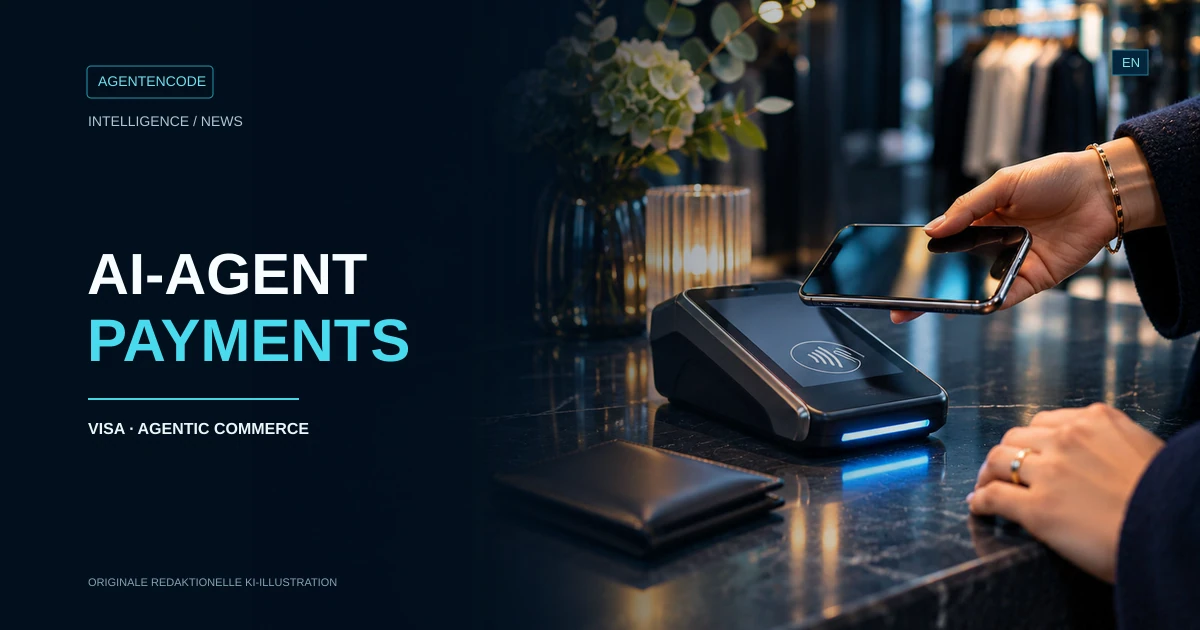
A new stage for AI-initiated payments in Europe
On November 18, 2026, Visa announced an expansion of Agentic Ready across Europe. The program is moving beyond card issuers to include merchants, payment service providers and acquirers—the organizations responsible for accepting and processing transactions. Visa's European announcement identifies more than 85 initial acceptance partners, following the participation of more than 40 European issuing banks. Named participants include Adyen, Mollie, Nexi, PayOne and Worldline.
This matters because shopping agents may soon do more than find an item or draft a basket. Under defined permissions, they could prepare or initiate payment steps. Moving from advice to financial action raises practical questions about identity, consent, fraud prevention and accountability when something goes wrong.
Why a store must recognize an AI buyer
Traditional checkouts largely assume a person controls the session. An AI acting for someone else adds questions: Who authorized the agent, what is its spending scope, and which business should be paid? Visa positions Agentic Ready as a collaborative testing framework for recognizing, authenticating and processing trusted agent-initiated transactions through established payment systems.
Payment providers are central because they connect merchants to banks and networks. They must assess whether an agentic payment is legitimate and which risk signals accompany it. Software merely stating that it represents a consumer is not a substitute for an enforceable authorization process.
85 European partners is not 85 live consumer services
Visa says its European acceptance expansion starts with over 85 participants. Its wider global announcement names over 140 acceptance-side participants, alongside more than 175 issuers in 45 markets. These figures describe different scopes. It would be inaccurate to report the global figures as European-only or add them together as the number of live retail checkouts.
Participation means working on readiness, implementation and testing. It does not demonstrate that any Visa card can immediately authorize any shopping agent at every online retailer. The company expects further expansion during 2027 and does not promise universal consumer availability in Germany on announcement day.
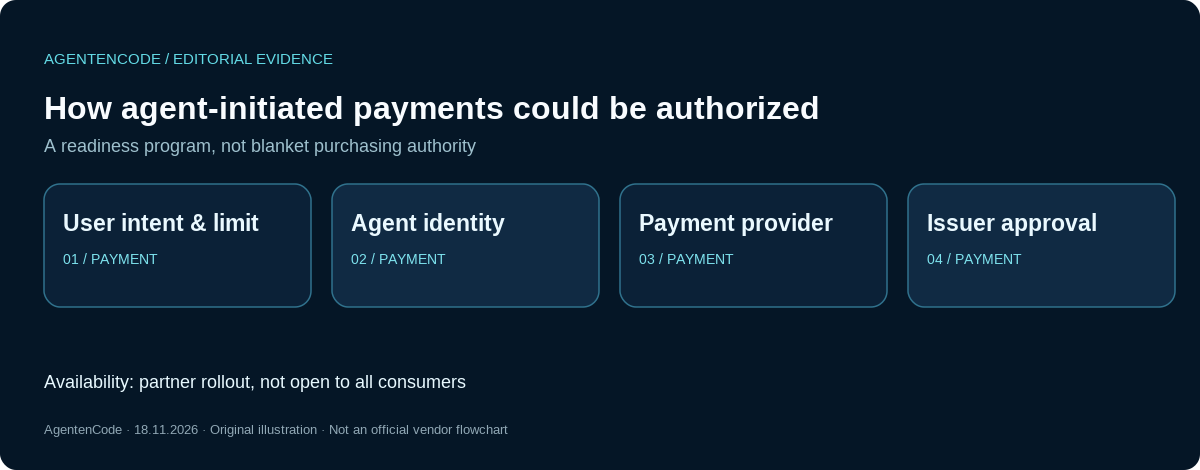
Identity, payment tokens and fraud controls
The initiative focuses on how merchants and payment providers can identify trusted agents and safely process transactions within existing rails. Network-token approaches can help keep raw card information out of places where it is not needed. Partners are testing authorization and risk-management flows rather than simply giving autonomous software unrestricted credentials.
Still, terminology such as trusted or secure is an intended design standard, not an independent certification that every implementation is abuse-proof. Erroneous orders, disputed permissions, refunds and fraud detection all require clear operational procedures. The launch material does not provide a universal measured failure rate.
Why payment processors matter as much as models
The European partner group includes payment companies serving many merchants. Mollie emphasizes handling complex standards for smaller sellers; PayOne focuses on detecting and authenticating agent transactions; Worldline refers to previous live end-to-end demonstrations in European markets. Different vendors will need to make compatible decisions about risk and authorization.
That is why the development cannot be reduced to a feature in a single chatbot. An agent might successfully select a product, but checkout will fail if the merchant, payment service provider or issuer cannot verify its authority. Broad participation improves readiness, while leaving the real operational outcome to be demonstrated.
Business invoice payments are also in scope
Visa's global program also addresses business-to-business payments. Participants including Billtrust, HighRadius and Versapay are exploring how approved invoices and payment instructions could flow through supplier systems with reliable identification and audit trails. For procurement and finance teams, reducing manual transitions between ERP, invoice records and vendor portals is an attractive goal.
Yet company payments need delegated authority, budget controls, supplier verification and traceable approvals. A pilot does not show that high-value transactions are safe without human oversight. Procurement teams should specify which actions an agent may prepare and which require a designated approver.
What consumers and European merchants should do now
Consumers do not need to switch on a new payment mode just because Visa has expanded its partner program. Good practice still means reviewing merchant details, spending limits, authentication requests and actual charges. Future agentic experiences will need to state whether the agent may search, reserve, add items to a cart or make a final payment.
Merchants should focus on accurate inventory, clear pricing, returns and fulfillment details. Those considering agentic checkout should ask their current payment provider which specific capabilities are supported, how identity and consent are verified, and what happens when a transaction needs reversal. Marketing announcements alone do not establish those details.
AgentenCode assessment: delegation becomes a payment problem
The central change is the move from AI recommendations to economic actions carried out under limited authority. That requires coordination between a user's agent, merchants, payment providers and banks. Visa's latest expansion is evidence that the broader payment ecosystem is preparing for such interactions rather than leaving the issue to individual AI platforms. Our AI agent security guide explains why delegated permissions and human controls matter.
As of November 18, the verified milestone is a larger European readiness and testing effort, with more than 85 acceptance participants. The evidence does not justify claiming that autonomous shopping is now universally available or independently proven safe. Actual authorizations, outcomes and dispute handling will be the real test.
Frequently asked questions
Can every AI agent now pay with Visa in Europe?
No. Agentic Ready is a preparation and testing framework, not a blanket launch of agent payments for all European consumers.
What do the 85+ participants represent?
They are acceptance-side European partners, including payment providers and acquirers, rather than 85 separate broadly available consumer agent products.
How are agent payments meant to be secured?
Visa describes agent recognition, authentication, network tokens and existing fraud and authorization controls. No universal safety guarantee follows.
Does the initiative include business invoices?
Yes. Global participants are exploring approved B2B invoice payments with identity, payment instructions and audit requirements.
RESEARCH & CONTEXT
Sources for this article
This analysis relies on the original publications linked below, which readers can inspect directly.
- Visa Deutschland: Agentic Ready für Händler und Zahlungsdienstleister in Europa, 18.11.2026
- Visa Inc.: Agentic Ready expands to the acceptance ecosystem, 17./18.11.2026
- Business Travel News Europe: Visa adds acquirers to agentic programme, 18.11.2026
Checked November 18, 2026. Vendor claims, partner pilot scope and productivity benefits have not been independently reproduced or certified.
Related agents, systems and context
Product links identify the subject of a report; ecosystem links provide context, not shared feature claims.
- Background guideAgent evaluations and testing