
ChatGPT Wallet lets agents pay – but who approves each purchase?
OpenAI launches ChatGPT Wallet for agent-assisted purchases. We examine tokenized card credentials, individual approval, merchant readiness and US-only access.
The agent shops, the person authorizes
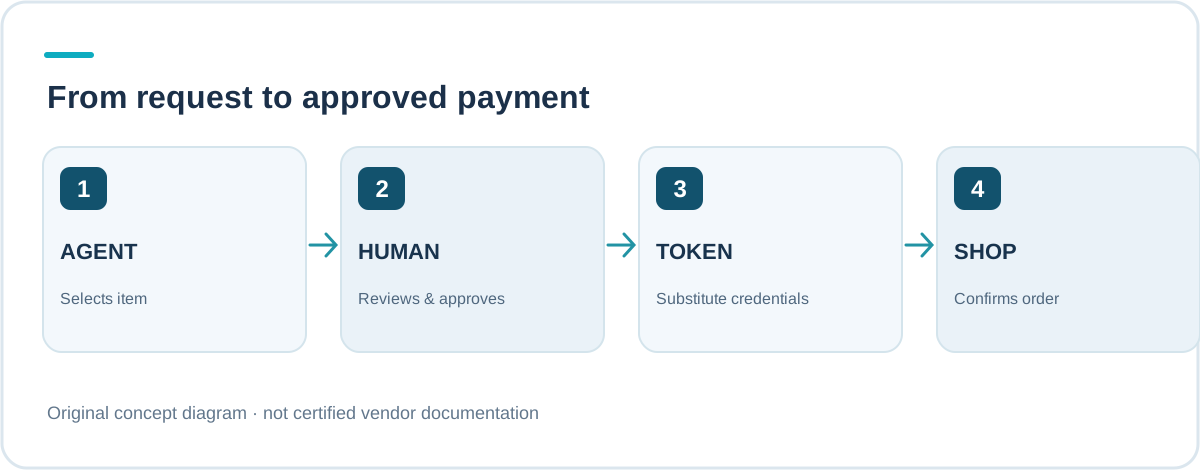
On November 13, OpenAI announced ChatGPT Wallet. It is intended to shorten the path from finding a product to completing a purchase through an AI agent. The critical distinction is that an agent does not simply receive an unrestricted credit card. Users add an eligible card and are asked to approve each transaction.
Before payment, the customer reviews the merchant, items, total and chosen card. The approval requires a security check such as Face ID or a fingerprint. This is a narrower arrangement than permitting an agent to buy anything within an unspecified spending budget.
How tokenized payments separate credentials
OpenAI says the agent and business do not see the underlying card details. After approval, the payment network provides substitute credentials used by existing checkout processes. American Express, Mastercard and Visa are named as partners in the launch.
Existing card rewards and eligible dispute protections are meant to remain in place. But authorizing payment does not prove the merchant successfully created an order. Customers still need to confirm completion and monitor the receipt and cancellation rules.
Merchants are part of the security model
A correct agent choice is not enough if a store blocks automated browsers or its fraud system declines the transaction. OpenAI published a commerce implementation discussion describing signed agent requests through Web Bot Auth and steps for supporting legitimate checkout traffic.
Retailers also need reliable product information, actual availability, accurate prices and understandable return policies. The merchant continues to handle fulfillment, pricing, returns and customer support, while banking networks evaluate the payment.
Availability: a US pilot, not global shopping
At launch, Wallet begins rolling out to eligible ChatGPT Pro subscribers aged 18 or older in the United States with an eligible US-issued card. It initially works through dots; that is not equivalent to every ChatGPT conversation or every country offering agent checkout.
OpenAI has outlined future purchase delegation with spending limits and categories. Those more autonomous controls are a roadmap statement, not a generally available capability on November 14.
Tokenization does not eliminate selection errors
Protecting card numbers is valuable, but it cannot prevent an agent from choosing the wrong item, seller, size or quantity. The authorization screen should therefore name the precise transaction; unexpected substitutions and post-approval changes should be considered as part of the threat model.
Organizations should separate recommendation, human approval and payment execution and keep usable audit records. See our agent-security guide and AgentenTrust reference for the broader governance context.
AgentenCode assessment: this is a checkout milestone
Wallet does not turn every shopping chatbot into a dependable buyer. But it introduces a concrete controlled payment step that could matter in retail, travel and digital services if merchants and payment networks make the interfaces reliable.
We view the explicit authorization and reduced exposure of card data as the central advancement. The launch announcement is not independent evidence of conversion gains, universal merchant support or error-free agent decisions. For background, see our ChatGPT business profiles analysis.
Frequently asked questions
Can I use ChatGPT Wallet in Europe today?
Not under the initial rollout. OpenAI limits access to eligible adult Pro subscribers in the United States with qualifying US cards.
Can the agent pay without approval?
The launch flow requires user approval and a security check for each transaction.
Does the agent receive the real card number?
OpenAI says agents and merchants receive substitute payment credentials rather than the original card details.
RESEARCH & CONTEXT
Sources for this article
This analysis relies on the original publications linked below, which readers can inspect directly.
- OpenAI – Introducing ChatGPT Wallet, 13 November 2026
- OpenAI – ChatGPT Wallet release notes, 13 November 2026
- OpenAI Developer Community – Commerce implementation notes
Checked November 14, 2026. Vendor statements, pilot scope and preview benchmarks have not been independently reproduced or certified.